+254797 813499

Posted by Doddy Collince OKelo on 27-Jan-2026
In Kenya, approximately 5,000 to 6,000 women and girls die annually due to preventable complications during pregnancy and childbirth. This translates to about 14 to 16 women dying every single day, the equivalent of 10, sixty-seater buses filled with mothers who will never return home. Think of a 500ml soda or water bottle. In childbirth, that same 500ml is a measure of death. Cross that line, and a mother edges dangerously close to the grave. That is the price of inaction.
Maternal Mortality Ratio (MMR) estimates range from 335 to 355 deaths per 100,000 live births. The leading cause is postpartum haemorrhage (PPH), accounting for 40% of these losses. When a mother begins to bleed after birth, the difference between life and death is often a matter of minutes and the accuracy of a measurement. Traditionally, health workers have relied on visual estimation, essentially guessing how much blood is on the floor or the bed sheets. This method is notoriously inaccurate, often underestimating blood loss until the mother is already in shock. This is compounded by obstructed labor (28%) and eclampsia (14%), which further strain a system already struggling with delayed access to care, a shortage of skilled birth attendants, and inadequate emergency obstetric infrastructure.
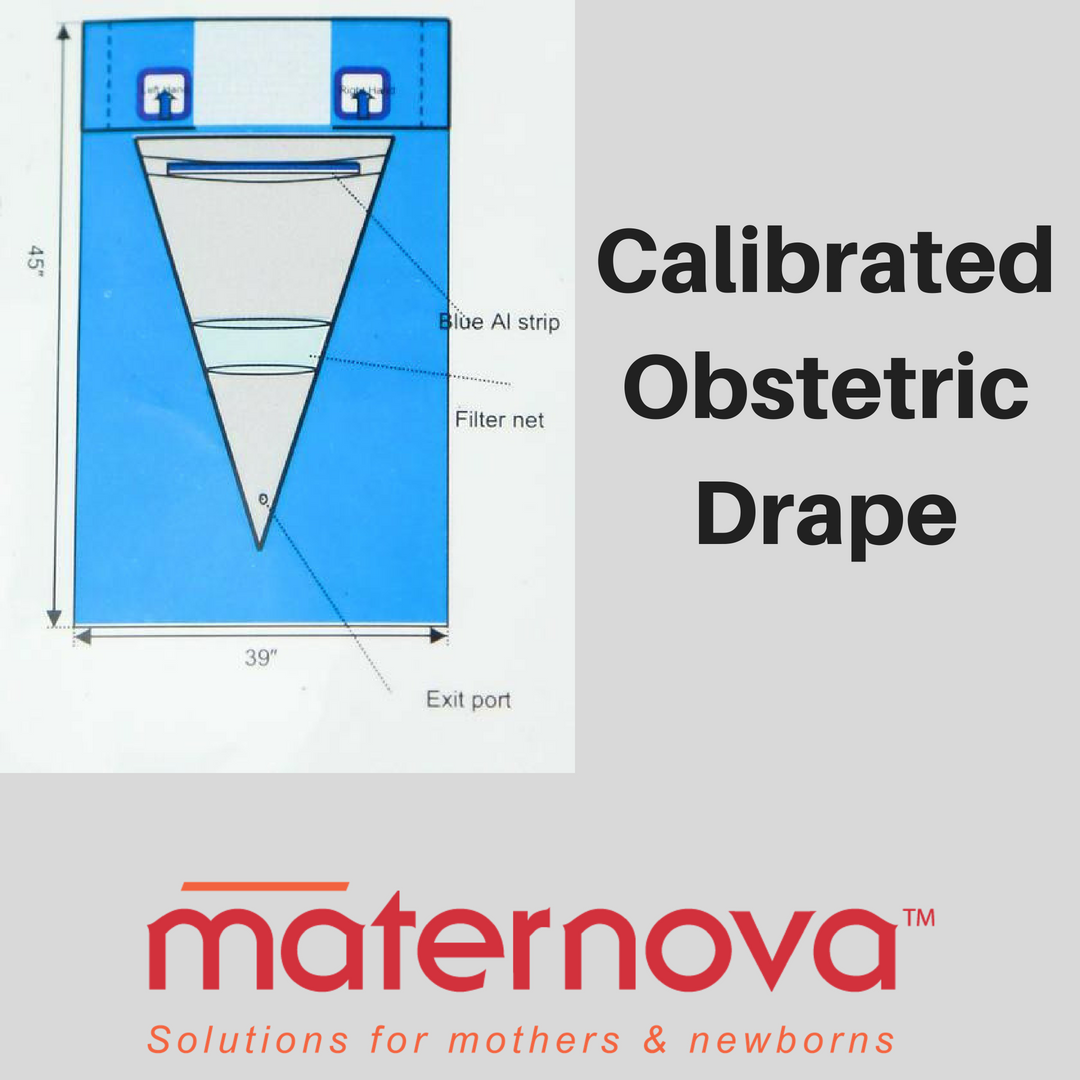
These issues can be sorted by calibrated drapes. These are plastic sheets, cheap and almost unimpressive, slipped under a mother in the rawest hours of childbirth. They serve a sacred purpose. They allow the ink of life, measured by a steady hand, to be tracked with absolute precision. By catching the blood and funnelling it into a marked V-shaped pouch, they provide a measure of truth that does not falter. It transforms a guess into a clinical certainty. When the blood hits the 300ml or 500ml markings, it triggers the MOTIVE bundle, a standardized set of life-saving interventions including uterine massage, medicines to stop bleeding, and IV fluids.
The process is seamless. After delivery, the drape is placed under the woman’s lower back and tied around the waist. As the pouch collects blood, readings are taken every 15 minutes. By providing a direct visual trigger, these drapes allow for early detection within the critical golden hour, significantly reducing maternal deaths. Because they are cost-effective, with some versions being as simple and inexpensive as the Dk drape, they can be made accessible in every health facility in the country, from the largest referral hospitals to the smallest rural dispensaries.
A birthday is meant to be the gold-leaf dawn after the longest night, a celebration of a year of life won. By ensuring these drapes are in every delivery room, we ensure that the birthday of a child does not become the final day for the mother. When we use these tools to pull a life back from the brink, we move from the tragedy of empty bus seats to the joy of families returning home whole.
@doddyokelo

© 2026 Organisation Of African Youth | All Right Reserved.
Powered By Elvan Technologies

.jpg)
-fotor-2026072113348.png)


0 Comments