+254797 813499

Posted by OAY Kenya on 03-Aug-2026
Hii wiki ukona fom? Ukona shugli? Acha tukupin location bas.
(Do you have a plan this week? Are you busy? Let us tell you the place to be.)
In 2025, the first-ever Kenya National Youth Climate Action Innovation Summit made three promises worth remembering. It unveiled the Kenya Youth Climate Advisory Council, tasked with anchoring youth voice in climate policy; drafted a Youth in Climate Action Declaration, meant to feed into the 2025 Devolution Conference, and a Principal Secretary stood on that stage at KISE and unveiled a National Strategy on Green Skills and Jobs for 2025–2030, calling on the room to turn commitments into “concrete partnerships and impactful action.”
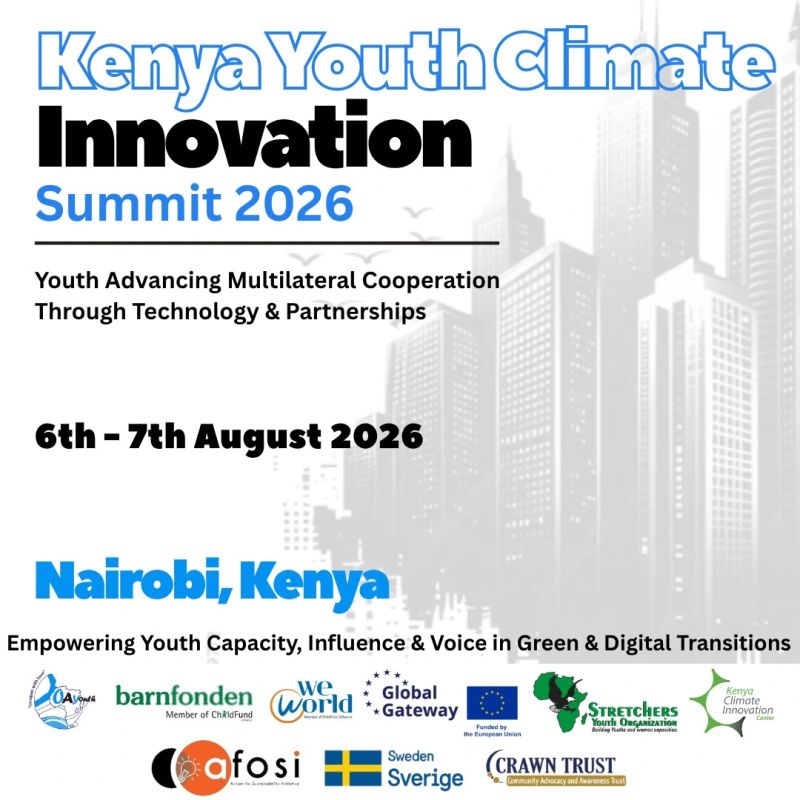
A year later, the 2nd Annual Summit returns to Nairobi on 6–7 August, and the honest question isn’t what this year’s agenda looks like but rather whether last year’s agenda went anywhere. Were the promises fulfilled, or were they sounds in the wind that did not travel far?
First, the Kenya Youth Climate Advisory Council didn’t stay a ribbon-cutting; it’s now working alongside County Youth Forums that OAY has since built out—15 youth advocacy organizations and 10 youth enterprises in Nairobi alone, feeding directly into this year’s summit planning. A Youth Work Community of Practice, formed just this February, is where this year’s speakers are being drawn from. We need to verify whether the Green Skills Strategy translated into actual green jobs or whether last year’s Youth Declaration moved the Devolution Conference the way it was meant to. Those are the questions this year’s summit inherits and will find answers to.
This year raises the stakes considerably. Where 2025 drew roughly 120 and 104 participants across its two days, 2026 is built for 300 or more participants—youth innovators, private sector investors, financial institutions, and policymakers, all under a new theme: Youth Advancing Multilateral Cooperation Through Technology and Partnerships. Four pillars carry it:
Employment in the Green and Digital Economy — anchored by the Top 30 Under 30 Youth Innovations Award, which isn’t just recognition. Winners get mentorship and incubation support, with a stated goal of moving at least five startups to investment-ready status within a year.
Youth-Led Business Advocacy — where this year’s Youth Agenda, drafted under the Sheria ya Vijana banner, gets formally submitted to government ministries and international forums, including COP processes.
Knowledge Exchange—hands-on idea labs on AI, IoT, and climate resilience, aimed at lifting technical literacy for well over half of attendees.
Innovation Exhibition and Expo — at least 20 youth enterprises showcasing solutions, capped by a Top 30 Under 30 awards session.
It’s a bigger stage than last year’s, but scale isn’t the same as follow-through, and last year’s summit is proof of both halves of that sentence: real institutional groundwork (KYCAC, the County Youth Forums) sitting alongside declarations whose fate is still, a year on, hard to pin down.
That’s the test this year’s summit will actually be measured against—not how many people fill the room on 6–7 August, but whether the Youth Agenda submitted this time reaches the ministries it’s addressed to and whether the Top 30 winners are still building a year from now. The Summit’s own sustainability framework says progress on commitments gets documented and reviewed annually. This piece is one way of holding it to that.
This is going to be a ground-shifting summit where youth in climate action will be the centerpiece. We will talk, learn, execute solutions, and award those who are doing great in advancing climate action in the country. This is definitely a do-not-miss kind of occasion, and we hope to see you there.
Article by Faith Ndanu.
© 2026 Organisation Of African Youth | All Right Reserved.
Powered By Elvan Technologies

.jpg)
-fotor-2026072113348.png)


0 Comments