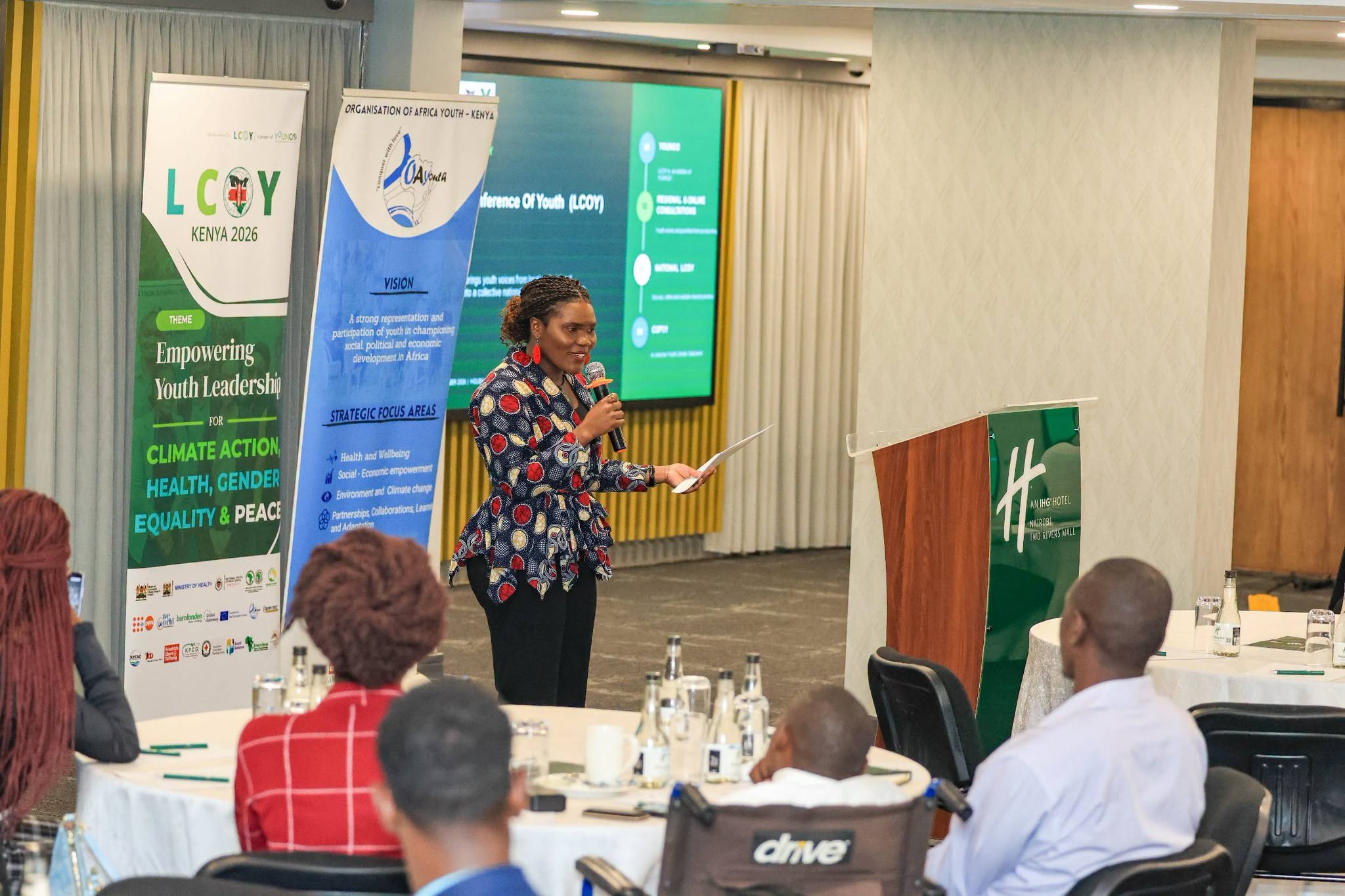
LCOY Kenya 2026 brought together young people and climate stakeholders in Nairobi on 23–24 September under the theme “Empowering Youth Leadership in Climate Action, Health, Gender Equality and Peace". a, Empowered Youth: Advancing Climate Finance, Governance, and Adaptation.”
Young people from across Kenya have called for stronger participation in climate decision-making, greater access to climate finance and practical support for youth-led climate solutions as the Local Conference of Youth on Climate Change (LCOY Kenya 2026) concluded its two-day national conference in Nairobi.
Held on 23–24 September 2026 at Two Rivers, the conference brought together young climate advocates, youth-led organisations, community-based organisations, civil society organisations, development partners, government representatives and climate actors from across the country under the theme “Resilient Kenya, Empowered Youth: Advancing Climate Finance, Governance, and Adaptation.”
The conference was organised by the Kenya Youth Climate Advisory Council (KYCAC), a youth climate governance structure established under the Sikiliza Sauti Yetu: Dunia Inaita project, as part of efforts to strengthen meaningful youth participation in climate governance and action in Kenya.
Sikiliza Sauti Yetu: Dunia Inaita is an European Union-funded project led by WeWorld Kenya, implemented in partnership with Organization of African Youth (OAY) Kenya, CRAWN Trust and Barnfonden. The project works to strengthen youth and civil society participation in climate action, governance and advocacy, including creating spaces where young people can organise, engage decision-makers and advance solutions to climate challenges affecting their communities.

LCOY Kenya 2026 therefore formed part of the project's broader efforts to ensure that young people's voices are not only collected, but organised into meaningful recommendations that can influence climate policy and decision-making.
From community voices to a national climate conversation
The two-day national conference was the culmination of months of consultations and engagement with young people across different parts of Kenya.
Under the LCOY Kenya 2026 process, young people were engaged through regional consultations, community-level engagements and a national virtual consultation to identify the climate challenges affecting their communities, the barriers they face in taking climate action and the changes they want to see from government and other stakeholders.
The findings pointed to several recurring priorities, including access to climate finance, meaningful youth participation in decision-making, government and policy support, climate awareness, skills and capacity development, and support for climate-resilient livelihoods and local solutions.
Meanwhile, funding and finance emerged as the most frequently identified barrier in the national virtual consultation. Other recurring concerns included policy and government support, community awareness and engagement, and access to data, skills and capacity.
These voices and priorities formed part of the evidence brought into the national LCOY conversation.
A National Youth Climate Statement for COP31
One of the key outcomes of LCOY Kenya 2026 was the development of the Kenya National Youth Climate Statement, bringing together youth-driven recommendations on climate finance, governance, adaptation, mitigation, inclusion and climate-resilient food systems.
The statement is intended to provide a consolidated youth position for engagement with national policymakers and YOUNGO, the official children and youth constituency of the United Nations Framework Convention on Climate Change (UNFCCC).
It will also contribute to Kenya's wider youth climate advocacy ahead of COP31 in Antalya, Türkiye, creating a link between climate priorities raised at community and national level and the global climate negotiations.
The LCOY process is part of the wider YOUNGO structure, meaning that the Kenya conference provides an opportunity for young people's priorities to feed into the global youth climate agenda and discussions leading to COP31.
Young people, government and partners at the table
The conference brought together a diverse group of stakeholders, including young people and representatives from youth organisations and CBOs across the country, alongside civil society organisations, development partners, government representatives and climate actors.
Among the partners and organisations represented were UNFPA, Kenya Red Cross Youth, Climate YES and Friedrich Ebert Stiftung, alongside other organisations supporting youth climate action and participation.
The gathering created space for young people to engage with organisations and institutions working on climate change, while also bringing different actors together around the priorities emerging from the consultation process.
Tags